How Often Should an Office Be Cleaned? Commercial Frequency Guide
Build the right office cleaning schedule with a room-by-room frequency matrix for washrooms, kitchens, desks, floors, high-touch points, and seasonal deep cleaning.
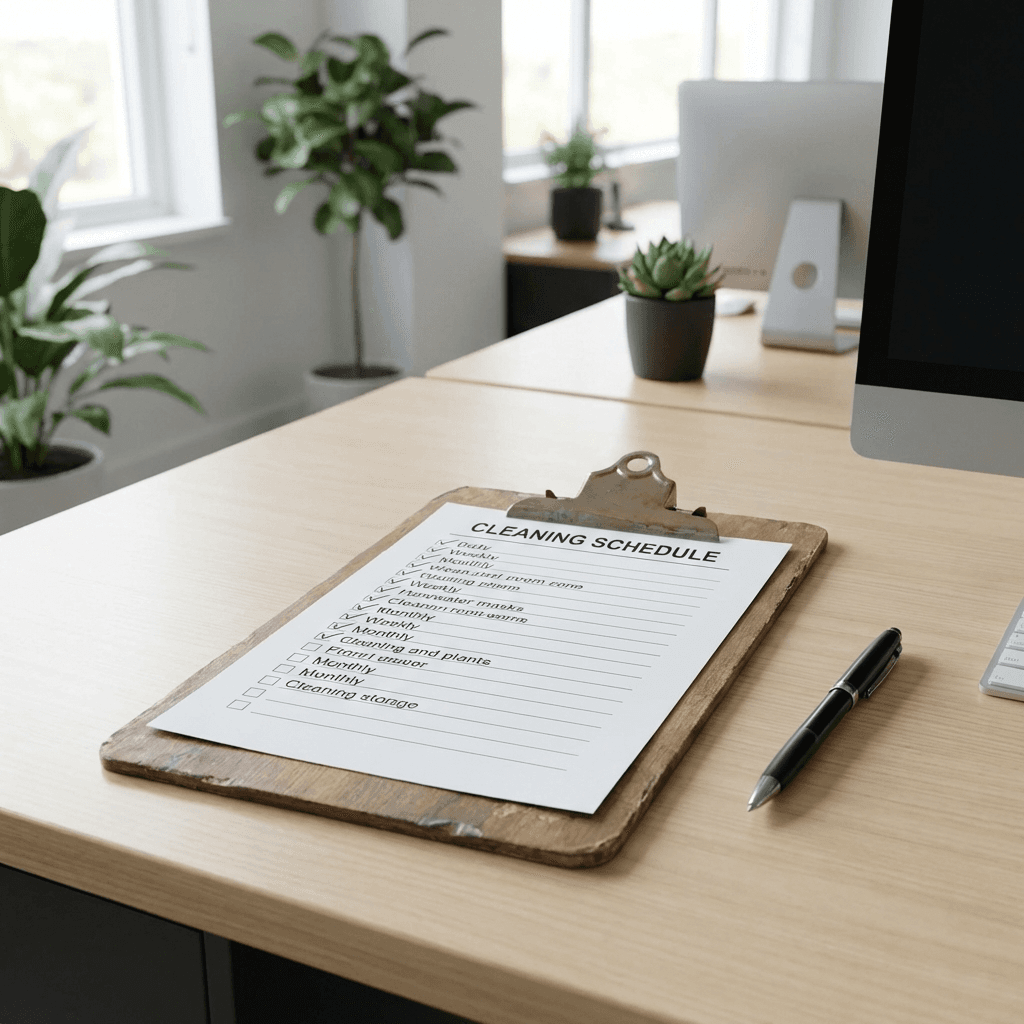
How often should an office be cleaned? For most Toronto workplaces, the right answer is not “daily” or “weekly” for the whole building. It is a risk- and traffic-based schedule: washrooms, kitchens, entrances, waste, and frequently touched surfaces receive the most attention, while private offices, high dusting, carpet extraction, and other detail work run on a planned rotation.
A well-designed frequency plan avoids two expensive problems. Under-cleaning creates odours, visible soil, complaints, pest risks, and premature wear. Over-cleaning spends labour on already-clean surfaces while important periodic work is ignored. This guide gives facility managers a practical starting matrix and explains how to adjust it for their building.
Commercial cleaning frequency at a glance
| Area or task | Typical starting frequency | Increase frequency when… |
|---|---|---|
| Washrooms | Daily; inspect during operating hours | Public access, multiple shifts, or supplies run out |
| Kitchen and break room | Daily on occupied days | Food is prepared, bins fill quickly, or pests are a concern |
| Entrances and lobbies | Daily; spot service as needed | Rain, snow, salt, or high visitor traffic is present |
| Waste and recycling | Daily or when two-thirds full | Food waste, odour, leakage, or contamination occurs |
| High-touch points | Daily in shared areas | There is high turnover, illness, or vulnerable occupancy |
| Open-office floors | Vacuum 2–5 times weekly | Visible debris, wheeled traffic, or outdoor soil increases |
| Private offices | 1–2 times weekly | They host visitors or occupants eat at desks |
| Carpet extraction | Every 6–12 months | Traffic lanes, salt, spots, or allergy concerns appear |
| High dusting and vents | Quarterly to annually | Dust generation or sensitive operations require it |
This matrix is a starting point, not a universal standard. A five-person consulting office and a 24-hour call centre should not share the same schedule. Your contractor should validate the plan with a walkthrough, occupancy data, complaint history, and inspection results.
Daily cleaning priorities
Daily tasks focus on hygiene, safety, odour control, and first impressions. In a typical occupied office, that means servicing washrooms and kitchens, removing waste, cleaning entrances, addressing visible soil, and maintaining shared touchpoints such as door handles, elevator buttons, appliance handles, taps, and reception surfaces.
Washrooms need a documented plan
Washrooms should be cleaned at least daily on occupied days and inspected more often when use is heavy. Fixture cleaning, touchpoint disinfection, floor care, waste removal, odour correction, and restocking should be included. As of January 1, 2026, applicable Ontario workplaces must maintain records of washroom cleaning under updated occupational health and safety requirements. Ontario’s official guidance explains that the appropriate practice depends on the particular workplace while facilities must remain clean and sanitary.
Kitchens and break rooms
Food residue changes the risk profile. Counters, sinks, tables, appliance exteriors, and floors should be cleaned on occupied days. Food waste should not sit overnight. Inside refrigerators, cupboards, microwaves, and coffee equipment can follow a weekly or monthly rotation, with a quarterly reset and a clear employee food-disposal policy.
Entrances during Toronto winter
Entrances may need several quick interventions per day during snow and rain. Removing water and salt is a slip-prevention and asset-protection task, not simply cosmetic cleaning. Effective walk-off matting, routine vacuuming, wet-floor response, and scheduled salt extraction protect surrounding carpet and hard floors.
Weekly and rotational detail work
Not every surface needs attention on every visit. Weekly rotations commonly include detailed dusting, low ledges, phones, chair bases, partition glass, doors, baseboards, low-use rooms, and spot cleaning of walls. Rotations should be visible in the scope so these tasks do not disappear when the crew is busy.
Private workstations require a clear desk policy. Cleaners should not move confidential papers, devices, or personal items. If a desk cannot be accessed, define whether the cleaner skips it, cleans only the exposed edge, or leaves a notice. This small operational agreement prevents inconsistent results and protects privacy.
Monthly, quarterly, and annual projects
Periodic maintenance protects assets and prevents a recurring contract from becoming reactive. A professional annual plan may include:
- Monthly: detailed kitchen equipment, interior partition glass, chair and table legs, low vents, baseboards, and hard-to-reach ledges.
- Quarterly: machine scrubbing, grout detailing, upholstery spotting, high dusting in selected zones, and deep washroom descaling.
- Semi-annually: carpet extraction in traffic lanes, full interior glass, upholstery cleaning, and seasonal entrance restoration.
- Annually: full carpet program, floor refinishing where needed, high-level dust removal, lighting and diffuser detailing, and a complete scope review.
Manufacturer guidance, warranty conditions, floor finish, building use, and visible wear should determine the exact intervals. Waiting for a carpet or floor to look heavily soiled usually means restorative work will cost more.
How facility type changes the schedule
Standard and hybrid offices
Two or three visits per week may suit a small hybrid office with controlled access and low food waste. Shared washrooms, kitchens, and occupied zones still need service based on use. Occupancy calendars can help shift effort to the busiest days.
Medical and dental offices
Clinical spaces require procedures defined by the facility’s infection prevention program, product labels, and applicable guidance. Reception, treatment rooms, washrooms, and high-touch surfaces usually need service every operating day. Cleaning and disinfection are separate steps when visible soil is present, and product contact time matters.
Retail and public-facing facilities
Retail, condominium common areas, and public venues are judged throughout the day. A day porter or scheduled checks may be more effective than relying only on an overnight clean. Glass, entrances, spills, waste, and washrooms are the visible priorities.
Warehouses and industrial sites
Loading areas, production dust, forklift traffic, oil, packaging debris, and safety requirements shape the plan. Floors may require mechanical sweeping or scrubbing, while high dusting follows a risk-based schedule. Cleaning methods must avoid dispersing hazardous dust or interfering with operations.
Five signals that your frequency is too low
- Washroom supplies run out or odours return before the next visit.
- Entrance soil travels beyond the first matting zone.
- Waste bins overflow or food waste remains overnight.
- Recurring complaints focus on the same rooms or time of day.
- Floor finish, carpet traffic lanes, or grout deteriorate faster than planned.
When one of these signals appears, do not automatically add a full-building visit. Increase service in the affected zone, adjust the task, or change the time of service. A short midday washroom and lobby check may solve a problem more economically than adding another complete night clean.
How to build a frequency plan in four steps
- Map the building: list every room, surface type, fixture count, and access constraint.
- Score traffic and risk: note occupancy, public access, food, moisture, sensitive users, and seasonal soil.
- Assign tasks and intervals: define what happens each visit and what rotates weekly, monthly, or annually.
- Inspect and adjust: review complaints, supply use, photos, and quality scores after the first 30 days.
Frequently asked questions
Should an office be cleaned every day?
Busy offices and public facilities often benefit from daily service. Small or hybrid offices may perform well with two or three visits per week if washrooms, kitchens, waste, and occupied areas remain sanitary between visits.
How often should office carpets be professionally cleaned?
Plan full extraction about every 6–12 months for many offices, with more frequent interim cleaning in entrances and traffic lanes. Soil load, carpet warranty, winter salt, and spot history should determine the final interval.
Is disinfecting every surface daily necessary?
Routine cleaning is appropriate for many low-touch surfaces. Shared high-touch points and higher-risk environments deserve more attention. Where disinfection is required, first remove visible soil and follow the product label, including contact time and surface compatibility.
Get a custom frequency audit
Clearo can turn your occupancy, room mix, floor types, operating hours, and service priorities into a practical scope of work. Use the quick callback form on this page and tell us what type of facility you manage. We will follow up to arrange a walkthrough—no instant estimate required.
Keep planning