How Often Should You Clean Your Office Carpets? Complete Maintenance Guide
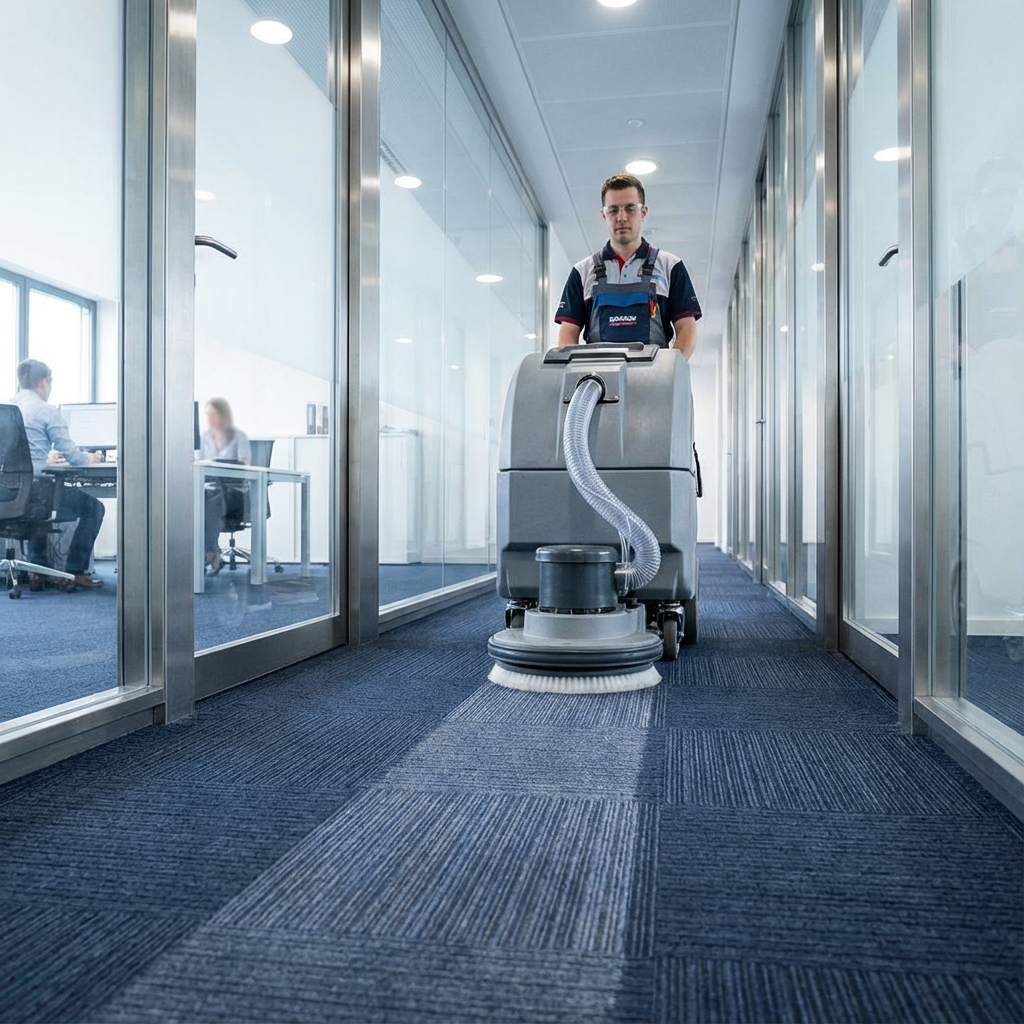
Commercial carpets represent a significant investment in your office environment, typically costing between $15-$50 per square foot when you factor in padding, installation, and quality materials. More importantly, carpets act as a giant filter for your office, trapping dust, dirt, allergens, and pollutants that would otherwise circulate through your ventilation system.
But like any filter, carpets need regular cleaning to function effectively. Neglected carpets don't just look bad—they can harbor bacteria, mold spores, and allergens that affect employee health and productivity. So, how often should you schedule professional carpet cleaning for your Toronto office?
Understanding Carpet Soiling Mechanics
Before establishing a cleaning schedule, it's important to understand how carpets accumulate soil. The Carpet and Rug Institute (CRI) identifies three distinct types of carpet soiling, each requiring a different removal strategy:
- Dry Particulates (79%): This includes dust, dirt, sand, and debris tracked in from outside. In Toronto, this often includes abrasive winter salt and grit. Dry soil cuts against carpet fibers like microscopic glass, causing premature wear.
- Water-Soluble Substances (15%): Common office spills like coffee, soft drinks, and mud fall into this category. While they stain, they are relatively easy to remove if treated promptly.
- Oily/Sticky Substances (6%): Cooking residue from micromarkets, asphalt tracked in from parking lots, and petroleum-based products. These substances bind dirt to the carpet fibers, creating those dark, ugly "traffic lanes" that vacuuming cannot remove.
Effective carpet maintenance addresses all three types of soiling through a combination of daily vacuuming (for dry soil), spot cleaning (for spills), and periodic deep extraction (for oily residues).
The "Appearance vs. Health" Debate
Many Facility Managers wait until the carpet "looks dirty" before calling a cleaner. By industry standards, this is too late. By the time a carpet visibly shows soil, it is already saturated with contaminants.
Think of it this way: You wouldn't wait until your shirt has visible brown stains to wash it. You wash it to remove sweat and odors. Carpets are the same. Scheduling cleaning based on a calendar rather than appearance extends the life of the asset and protects indoor air quality (IAQ).
Recommended Cleaning Frequencies by Zone
Not all carpet is created equal. Your maintenance plan should be zoned based on traffic intensity.
High-Traffic Areas: Every 3-6 Months
Zones: Entrances, ground-floor lobbies, elevator cabs, main corridors, and break rooms.
These areas act as the "catch basin" for the entire building. In a typical Toronto office during winter, these zones are bombarded with salt, slush, and water. Salt ranges in pH from highly alkaline to acidic, and if left in the carpet, it can chemically burn the nylon fibers.
Recommendation: Schedule Hot Water Extraction (HWE) quarterly. During the winter months (November-March), consider monthly encapsulation cleaning for entrance runners to manage salt buildup.
Medium-Traffic Areas: Every 6-12 Months
Zones: Open plan office aisles, conference rooms, clerical areas, and secondary hallways.
These areas see consistent foot traffic but less direct outdoor soil. The main enemy here is the "coffee trail" and general dust accumulation.
Recommendation: An annual or semi-annual deep clean is usually sufficient, provided daily vacuuming is rigorous.
Low-Traffic Areas: Every 12-18 Months
Zones: Private executive offices, boardrooms used only occasionally, and storage rooms.
Recommendation: A deep clean every 12-18 months keeps these areas fresh. However, spot cleaning should still happen immediately upon any spill.
The Role of Prevention: Walk-Off Matting Systems
The most cost-effective way to clean a carpet is to keep it from getting dirty in the first place. Industry studies show that 80% of the soil in a building is tracked in on the soles of shoes. A properly designed entrance matting system is your first line of defense.
To be effective, you need a "Rule of 15": at least 15 feet of walk-off matting at every major entrance. This allows enough steps (roughly 5-6 steps per foot) for the mat to scrape heavy debris and absorb moisture before the shoe hits your interior carpet.
Without this barrier, your expensive office carpet effectively becomes the entrance mat. The abrasive grit tracked in acts like sandpaper, cutting the fibers every time someone walks over it, creating those ugly, worn-out traffic paths that no amount of cleaning can fix.
Methodology Matters: Steam vs. Encapsulation vs. Bonnet
When you hire a commercial cleaner, knowing the difference between cleaning methods ensures you get the right result. Not all "cleaning" is deep cleaning.
1. Hot Water Extraction ("Steam Cleaning")
This is the gold standard for restorative cleaning and is typically required by carpet manufacturers (like Shaw or Mohawk) to maintain their warranties.
Process: A truck-mounted or portable unit pumps hot water (often >180°F) mixed with a cleaning agent into the carpet at high pressure (300-500 PSI). It then immediately extracts the water and suspended soil with a high-powered vacuum.
Best For: Annual deep cleans, heavy soiling, and removing allergens/salt.
Pros: Removes deep-seated soil, flushes out chemical residues, and sanitizes.
Cons: Longer drying times (4-12 hours). Best done on Friday evenings or weekends to allow airflow.
2. Encapsulation ("Encap" or "Cylindrical Brush")
A modern low-moisture method that has revolutionized interim maintenance.
Process: A specialized machine with counter-rotating brushes scrubs a crystallizing polymer into the carpet pile. The polymer surrounds (encapsulates) soil particles, detaching them from the fiber. As the polymer dries (in about 20-30 minutes), it forms a brittle crystal that traps the dirt, which is then simply vacuumed away by your daily janitorial crew.
Best For: High-traffic lanes, quarterly maintenance, and 24-hour facilities.
Pros: Lightning-fast drying, no wicking (spots returning during drying), and improves carpet appearance immediately.
Cons: Not a substitute for deep extraction. It manages soil but doesn't fully flush the carpet.
3. Bonnet Cleaning (The "Do Not Use" List)
This obsolete method involves using a rotary floor machine with a round cotton pad soaked in solution to wipe the surface of the carpet.
The Verdict: Avoid this. While it makes the carpet look clean temporarily, it often pushes dirt deeper into the pile and can distort the texture of the carpet fibers (tip blooming). It leaves a heavy chemical residue that attracts more dirt rapidly (rapid resoiling).
The Spot Cleaning Protocol
Accidents happen. The golden rule of carpet care is: treat spills immediately. The longer a stain sits, the higher the chance it becomes permanent. Some substances, like coffee or wine, contain tannins that can permanently dye the fiber if allowed to set.
Ensure your day porter or cleaning staff has a professional-grade spot removal kit containing:
- Clean white absorbent cloths (colored rags can transfer dye)
- A neutral pH spotter (safe for most spills)
- A volatile solvent (for ink/gum)
- A bone scraper (for scraping up dried food)
- A small hand-held extractor or wet-dry vac
The Cost of Neglect: Penny Wise, Pound Foolish
Carpet cleaning is often the first item cut from a facility budget, but this is a false economy. Commercial carpet replacement costs $40-$60 per square yard (installed). Replacing a 5,000 sq ft office carpet costs roughly $25,000 - $35,000.
Compare breakdown:
Option A: Spend $0 on maintenance, Replace carpet in 5 years. Annual Cost: $5,000/year (amortized capital cost).
Option B: Spend $1,000/year on maintenance. Carpet lasts 12 years. Annual Capital Cost: $2,083 + $1,000 Maint = $3,083/year.
Result: Proper maintenance saves you thousands in capital expenditures.
Creating Your Customized Care Plan
An effective commercial carpet maintenance program includes:
- Daily: Vacuuming of high-traffic areas with commercial-grade HEPA equipment.
- Weekly: Vacuuming of all carpeted areas (including corners).
- Monthly: Inspection for spots and stains requiring specialized treatment.
- Quarterly: Interim cleaning (Encap) of entrances to manage seasonal soil.
- Annually: Deep restorative cleaning (Extraction) of the entire facility.
If you aren't sure where to start, we can help. Contact Clearo for a free facility assessment. We will measure your traffic patterns and build a maintenance schedule that protects your investment while keeping your workplace looking professional.